Water Above the Switchboard: The Overlooked Electrical Risk in Australian Buildings
31 May 2026 · BES Team
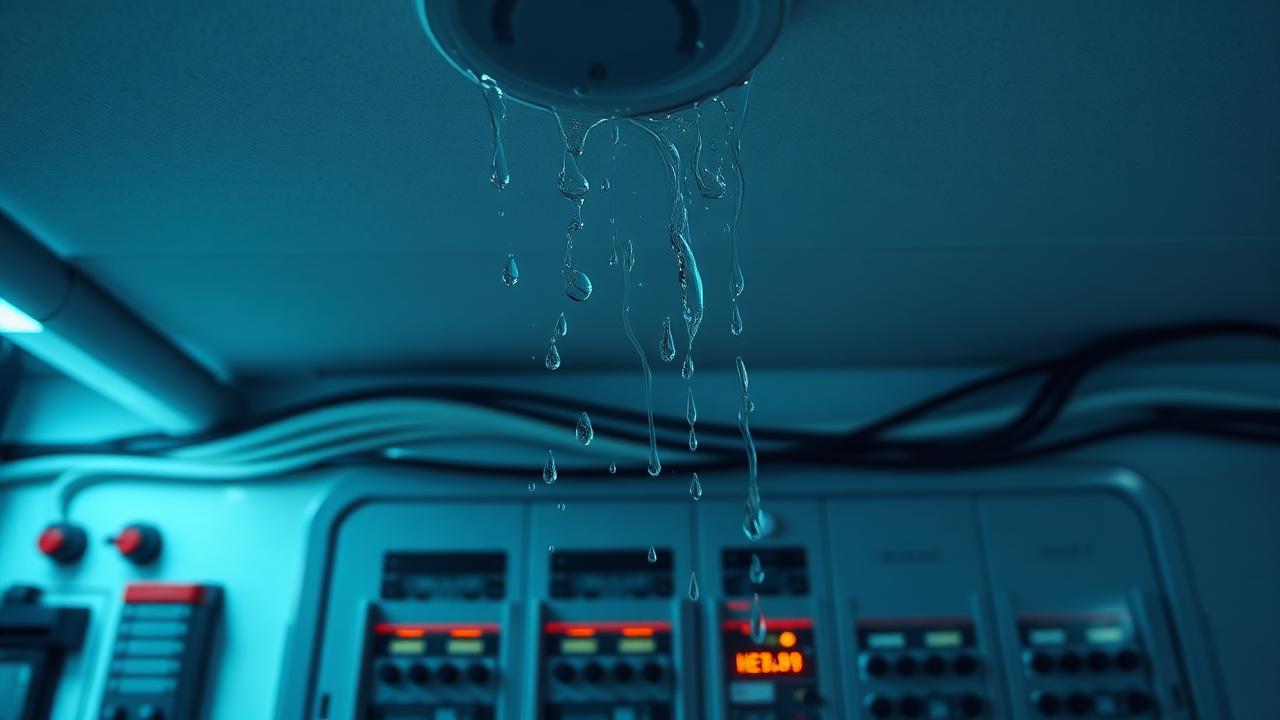
In many Australian buildings, the main switchroom sits closer to water risk than people realise. Hydraulic risers, drainage stacks, plantrooms, wet areas above, rooftop tanks, ageing concrete slabs and severe storm or cyclone events all create possible seepage paths. The first sign is rarely a dramatic leak — it is more often a damp ceiling tile, staining, condensation, corrosion or a small but dangerous water path above electrical equipment.
For a main switchboard, waiting until water reaches the panel is already too late.
Australian incident data and insurer loss reports consistently link electrical failures to environmental ingress. Major storm events along the east coast, tropical lows in northern Australia, and routine plumbing failures in older commercial stock all elevate switchroom risk.
Electrical Risk Is Not Only About Overload
Electrical faults can be triggered or worsened by environmental conditions, not only load:
- Water seepage
- Condensation
- Corrosion of busbar joints and lugs
- Dust combined with moisture
- Tracking-path formation
- Insulation degradation
- Leakage current risk
- Short-circuit risk
Why Australian Switchrooms Are Vulnerable
Several factors compound the risk in local conditions:
- Ageing commercial and strata buildings
- Dense hydraulic, fire and sanitary routing
- Plantrooms and wet areas located above electrical rooms
- Severe storms, hail and east-coast lows
- Cyclonic exposure in northern Queensland, NT and WA
- Ceiling seepage from upper levels
- Limited inspection access
- High consequence of main switchboard failure for tenants and operations
Why Visual Inspection May Be Too Late
By the time water stains are visible or dripping is observed, the building is already in a reactive situation. Early warning should detect:
- Dampness risk before it spreads
- Water ingress above the switchboard
- Leakage patterns near ceilings or slabs
- Localised abnormality before equipment is affected
PowerGuard AI Extends Monitoring Beyond Temperature
PowerGuard AI integrates water-ingress detection with switchboard condition monitoring:
- Water-ingress monitoring above and near the switchboard
- Early online alerts to facility teams
- Integration with thermal and electrical monitoring
- Escalation to maintenance contractors
- Incident record and AI response advice
The platform introduces integrated water-ingress monitoring for switchboards to prevent power outage caused by water leakage.
From Leakage Detection to Risk Prevention
| Conventional response | PowerGuard AI approach |
|---|---|
| Discover water after stain or complaint | Detect water-ingress risk earlier |
| Manual patrol | Continuous online monitoring |
| Isolated water alarm | Integrated switchroom risk intelligence |
| Reactive plumbing repair | Preventive maintenance before electrical impact |
Why Water Ingress Monitoring Should Be Part of Electrical Safety Strategy
Switchroom water-ingress detection should be treated as part of electrical reliability management, not only building-defect management.
Do not wait for water to touch electrical equipment.
Contact BES to see how PowerGuard AI detects water-ingress risk before it becomes an electrical incident.
Want to discuss your switchboard portfolio?
BES helps Australian buildings move from reactive repair to predictive electrical monitoring with PowerGuard AI.
Contact BES